Feng Shuiet Sa ChéDAVID MARTIN

David Martin — Geobiology, Chinese Feng Shui and Tibetan Sa Ché consultant

Read a place, harmonise its energies and reveal its potential.

Geobiology, Chinese Feng Shui and Tibetan Sa Ché offer three complementary ways of reading a place. David studies its surroundings, position and orientation, first from plans and then on site, in relation to the way it is used and the people who live there.

Depending on the situation, the consultation identifies what needs to be cleared, rebalanced, arranged or activated, before proposing improvements suited to the place and its occupants’ aims.

Consultations on site and remotely. Arrangements are discussed during the initial conversation.

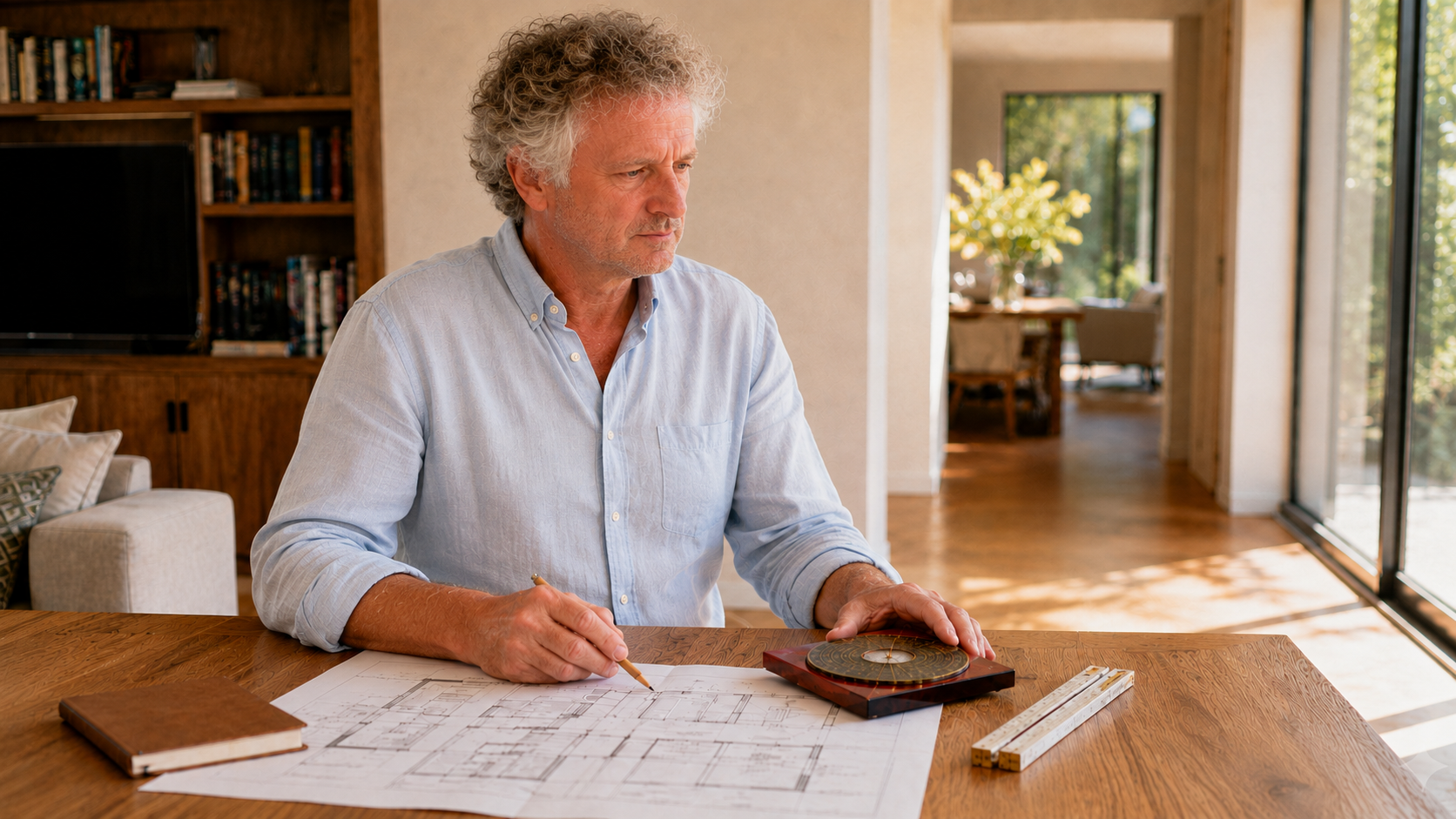
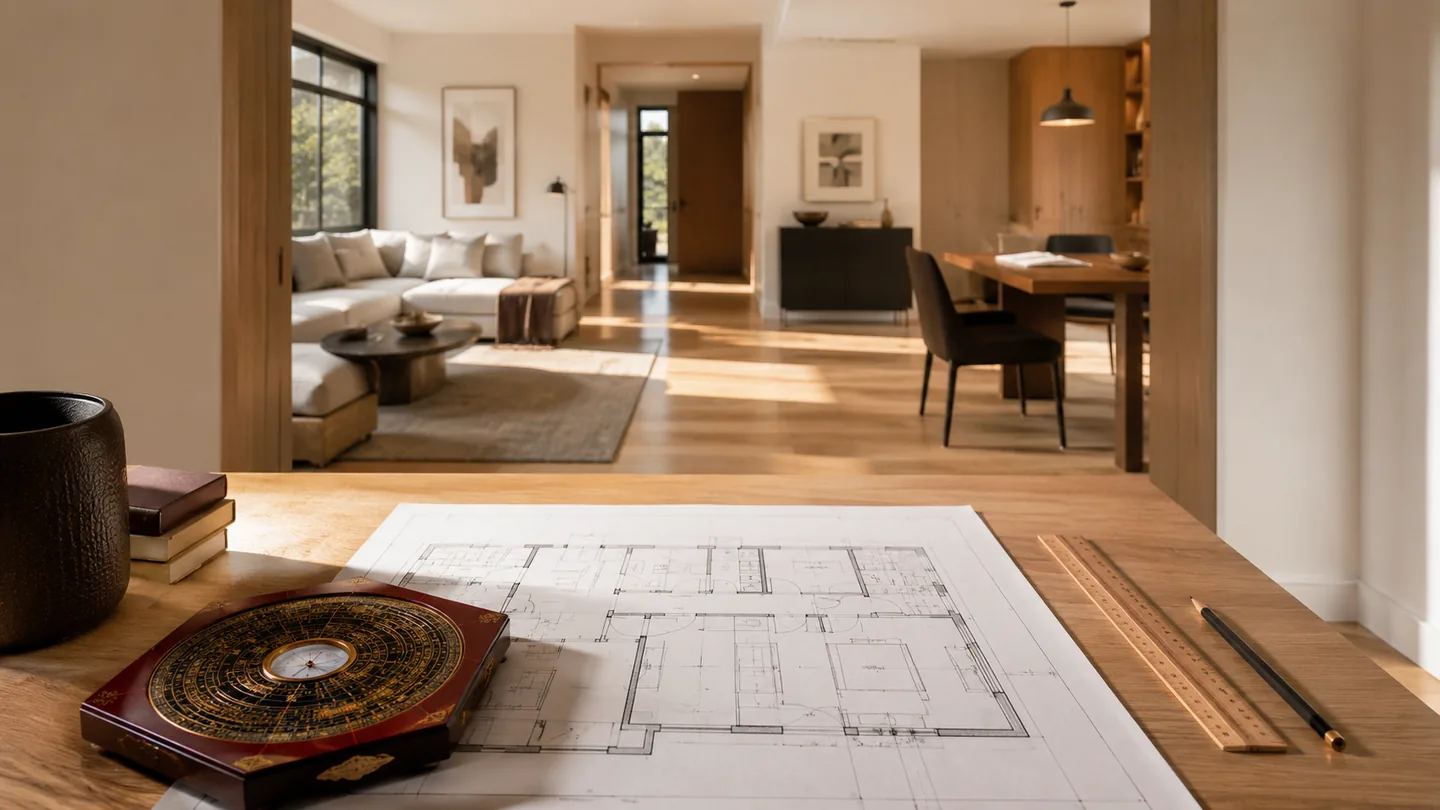
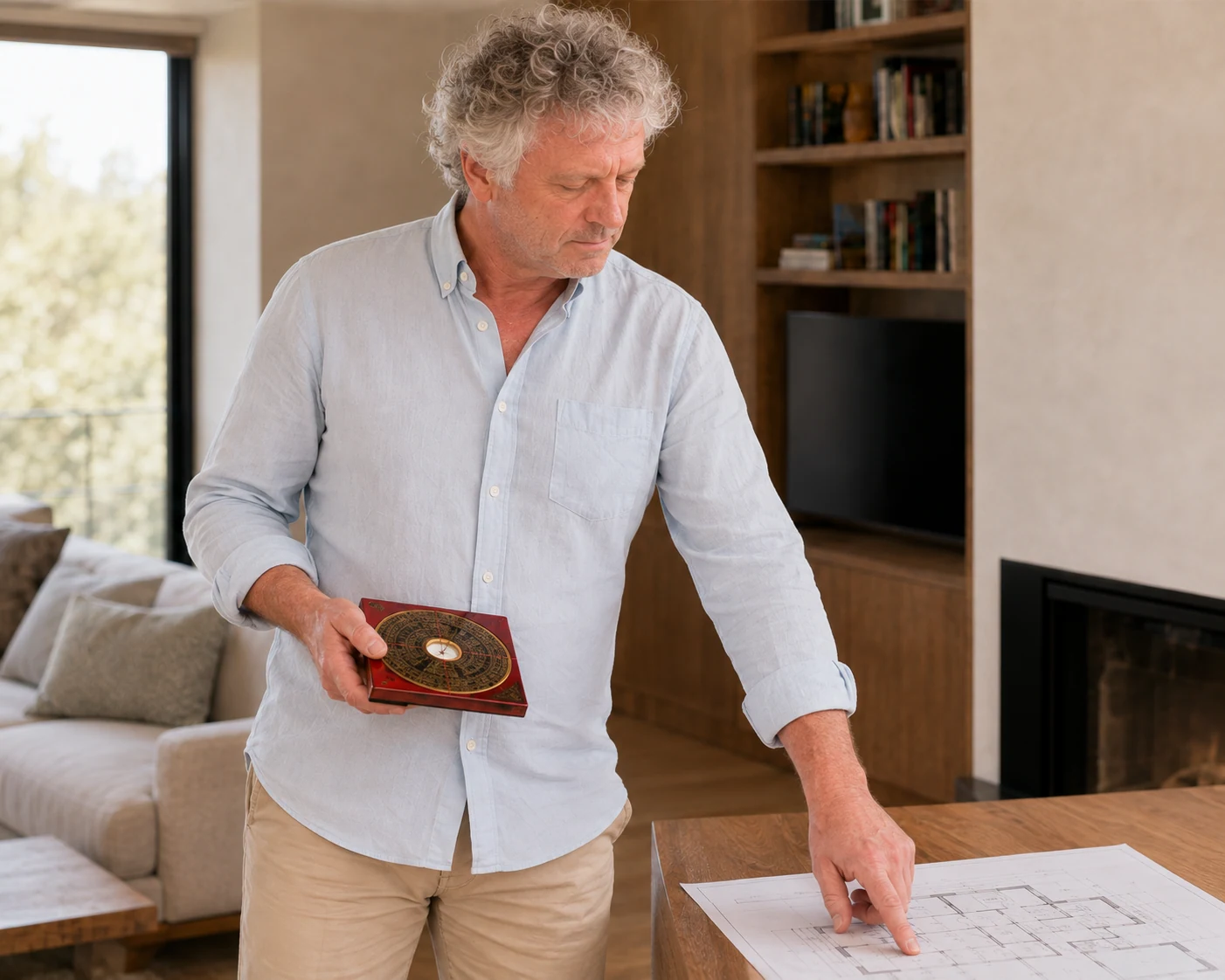
David Martin studies an interior plan while holding a Feng Shui compass.

Places that support your life

The study may address wellbeing and vitality, relationships, family life, children, education, projects, professional activity, resources, outside support, or personal and spiritual development.

David observes, analyses, connects the information and advises. The tools published here calculate and explain; interpreting a situation remains his work.

Our guiding principle

01 — David

David Martin speaking on the telephone.

Experience of places, enriched through transmission.

“Since 2009, I have observed places: their surroundings, exposure, orientation and history, and how people actually live in them.

My work brings together four areas of study:

  1. Geobiology, to identify and harmonise what this practice calls geopathogenic zones: telluric phenomena, the memory of places and electromagnetic disturbances.
  2. Energy clearing, when the situation calls for it. Within my traditional energy practice, I then examine what it describes as occult charges or entities connected with the place.
  3. Chinese Feng Shui and Tibetan Sa Ché, which give me complementary frameworks along with a broad range of tools and solutions for positioning remedies and activators in the nine areas of life. Harmonisation is based on the Flying Star configuration and the Compass and Form schools. Through forms, elements and colours, this approach is akin to interior and exterior design.
  4. Almanacs and temporal parameters, because an action begun at the right time is considered far more favourable than one begun at the wrong time, which may therefore be harder to carry through and lead to mixed results.

I draw on these approaches with discernment, to reveal a space’s potential and support its development towards greater balance and serenity.”

David Martin

Each approach illuminates a particular aspect of a place. David brings them into dialogue with what he sees on site, with everyday uses and with the occupants’ expectations. The aim is not to apply a ready-made method, but to understand what can genuinely change.

See how he works

Path & transmission

Teachers who have shaped his path.

David’s practice has also developed alongside teachers who connect a living ancestral tradition with close observation of places and the people who inhabit them.

David Martin alongside Jampa Ludrup.
David Martin with Jampa Ludrup.
Jampa Ludrup in front of a traditional Feng Shui compass.

Chinese Feng Shui

Jampa Ludrup

A Buddhist monk, author and consultant, Jampa Ludrup has studied Feng Shui since the 1990s and taught it since the early 2000s. David received from him teachings in Chinese Feng Shui within the transmission of Yap Cheng Hai, notably those of the Form School, the Compass School and Flying Stars.

During a teaching attended by David Martin, Jampa Ludrup summarised this principle as follows: “If you do only the minimum in Feng Shui, do just two things: activate the period’s water star and mountain star.”

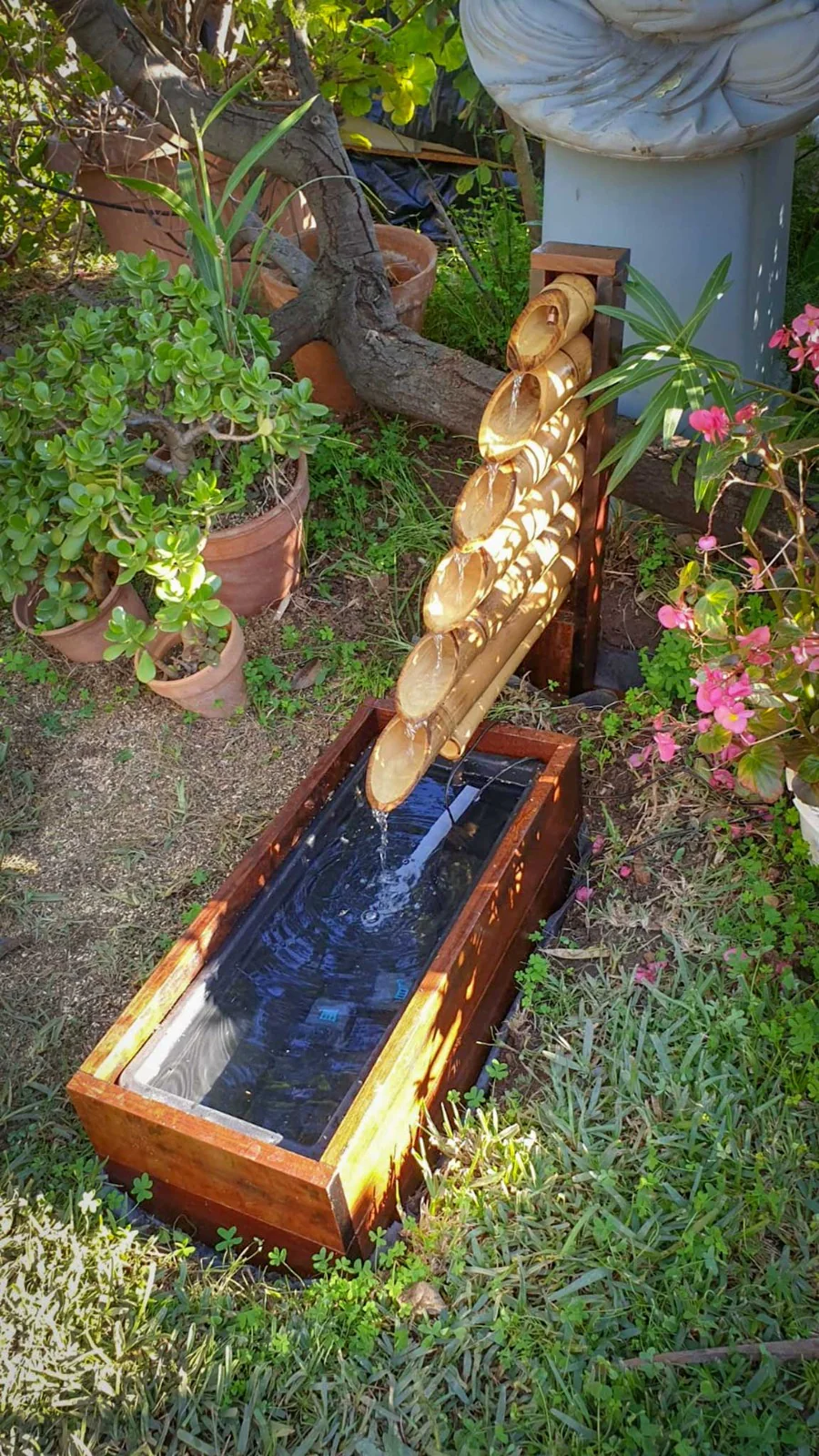
Within this approach, activating water requires particular care. For several years David has designed bespoke, handcrafted Feng Shui fountains, then determined their position according to the configuration of the place. These activations are traditionally associated with certain areas of life, particularly resources and relationships, depending on the stars involved and the period being studied.


Portrait of Dr Nida Chenagtsang.

Sowa Rigpa and Tibetan Sa Ché

Dr Nida Chenagtsang

A Tibetan physician, author and teacher, Dr Nida Chenagtsang is co-founder and medical director of Sorig Khang International. He trained in the Yuthok Nyingthig lineage and received both the transmission and authorisation to teach and pass on this tradition.

Sorig Khang International’s teachings include Sowa Rigpa, external therapies, Tibetan astrology and Sa Ché, the Tibetan art of geomancy. With Dr Nida, David deepened his practice of Tibetan astrology and Sa Ché.

This tradition offers an extensive reading of forms, energy-clearing methods and targeted solutions suited to the configuration of a place. It also includes a temporal dimension to identify moments traditionally regarded as the most auspicious for beginning an action.

02 — The approach

Four stages, in this order.

Understand the request, study the place and its users, compare observations, then propose suitable solutions.

Stage 1

Identify

Clarify the request, the use of the place and the people concerned. Useful documents are gathered before the visit to prepare the study and determine the appropriate form of support: energy clearing, geobiological study, geomantic study or a combined approach.

On site, David then observes the surroundings, position, orientations, circulation, light and actual uses of the place. When preliminary energy clearing appears necessary within his practice, it is explained and proposed before the study continues.

David observes the circulation and light in an interior.

Stage 2

Analyse

Part of the analysis is carried out remotely using information about the occupants, the available plans, and the position and surroundings of the place.

The visit makes it possible to take the necessary measurements, readings and observations. The results are then plotted on a plan and interpreted using the selected methods.

David analyses a plan using a Feng Shui compass and measuring instruments.

Stage 3

Connect

The findings are compared with actual uses, the people concerned, the architecture of the place and, where necessary, the project schedule. At this stage, the various options are compared and choices are made.

The documents provided are detailed and explained clearly and concisely so that they can serve as a reference and be used independently.

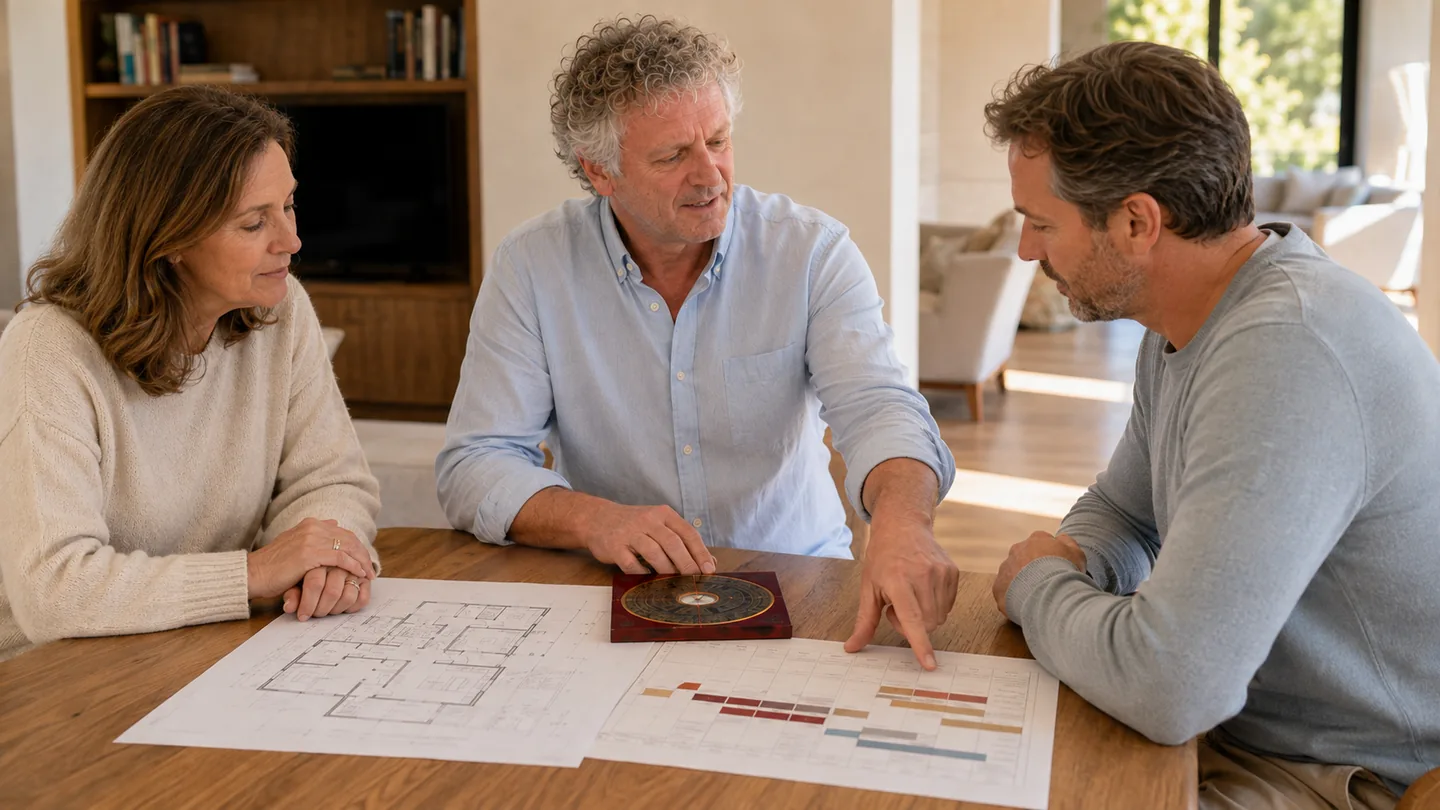
David connects his observations with a couple’s uses of their place while reviewing the plans.

Stage 4

Advise

David presents the improvement options suited to the configuration of the place. Clients remain free to choose which recommendations they wish to implement, immediately or at a later date.

These recommendations may involve arrangements, alterations, traditional remedies, targeted solutions or activators intended to support potential already present.

David helps clients understand the study, choose the solutions and put them in place. He also remains available to answer any questions that arise after the consultation.

03 — Practices & specialities

Several traditions, one coherent reading of a place.

Every place calls for a different response. David does not systematically layer methods: he selects the most relevant approaches according to the request, the configuration and uses of the place, its occupants and, where necessary, the timing of the project.

These practices make it possible to read a place, harmonise it, activate some of its potential and choose a suitable time for action.

Area 1

Read the place

01 GeobiologyObserve the relationships between the land, the building, its surroundings and its occupants.

In David’s practice, geobiology offers an overall reading of a place before its harmonisation is considered. It takes account of the outside environment, position, orientation, history, organisation and the way the place is actually used.

The study may also address telluric phenomena as interpreted within this practice, the presence of water, the memory of the place and the electromagnetic environment created in particular by installations and equipment.

David distinguishes phenomena that can be observed or measured from interpretations arising from his traditional energetic reading. Measurements, observations and uses are then compared in order to propose improvements suited to the situation.

May be appropriate for: a home, land, business premises, a building project, a renovation or a place where discomfort persists.

02 Energy clearingPrepare a place when its history or atmosphere appears to weigh on the way it is used.

Energy clearing may be proposed when David considers, within the framework of his practice, that the history of the place, certain memories, energetic charges or presences associated with it are affecting its reading or balance.

This intervention is not systematic. It is explained beforehand and adapted to the situation, the request and the people concerned. It may precede a geobiological, Feng Shui or Sa Ché study when David believes preliminary work is needed.

The aim is to establish a clearer foundation for the rest of the consultation and help the occupants reclaim the place under better conditions.

The method used, the way it is carried out and the accompanying recommendations are presented to the client before any intervention.

Area 2

Harmonise the space

03 Chinese Feng ShuiRead the forms, orientations and temporal cycles of a place.

Chinese Feng Shui studies the relationships between a place, its surroundings, orientations, organisation and time. David received these teachings from Jampa Ludrup within the transmission of Yap Cheng Hai.

His approach draws on three complementary schools. The Form School observes the landscape, buildings, routes, openings and interior organisation. The Compass School studies orientations, the Ba Gua and the cycles of the elements. Flying Stars introduce the temporal dimension and relate the period, orientation and configuration of the building.

The findings are compared with actual uses and the occupants’ aims. Recommendations may concern room functions, circulation, positions, forms, materials, colours, water or certain traditional activators.

David does more than apply a theoretical framework: on site, he checks how the place is actually inhabited.

04 Tibetan Sa ChéRelate the land, elements, forms and time.

Sa Ché is the Tibetan art of geomancy, sometimes described as Tibetan Feng Shui. Its name refers to analysing the land and, in its traditional presentation, to studying earth, water, fire, wind and wood.

This tradition relates the forms of the land, the environment, the elements, human uses and the temporal dimension. Sorig Khang International distinguishes in particular tantric, astrological and medical traditions of Sa Ché.

David received this transmission from Dr Nida Chenagtsang. He uses it as a complementary reading alongside Chinese Feng Shui, particularly when a project calls for attention to forms, timing or targeted solutions suited to the place.

Sa Ché does not replace Chinese Feng Shui: the two traditions can complement one another without being confused.

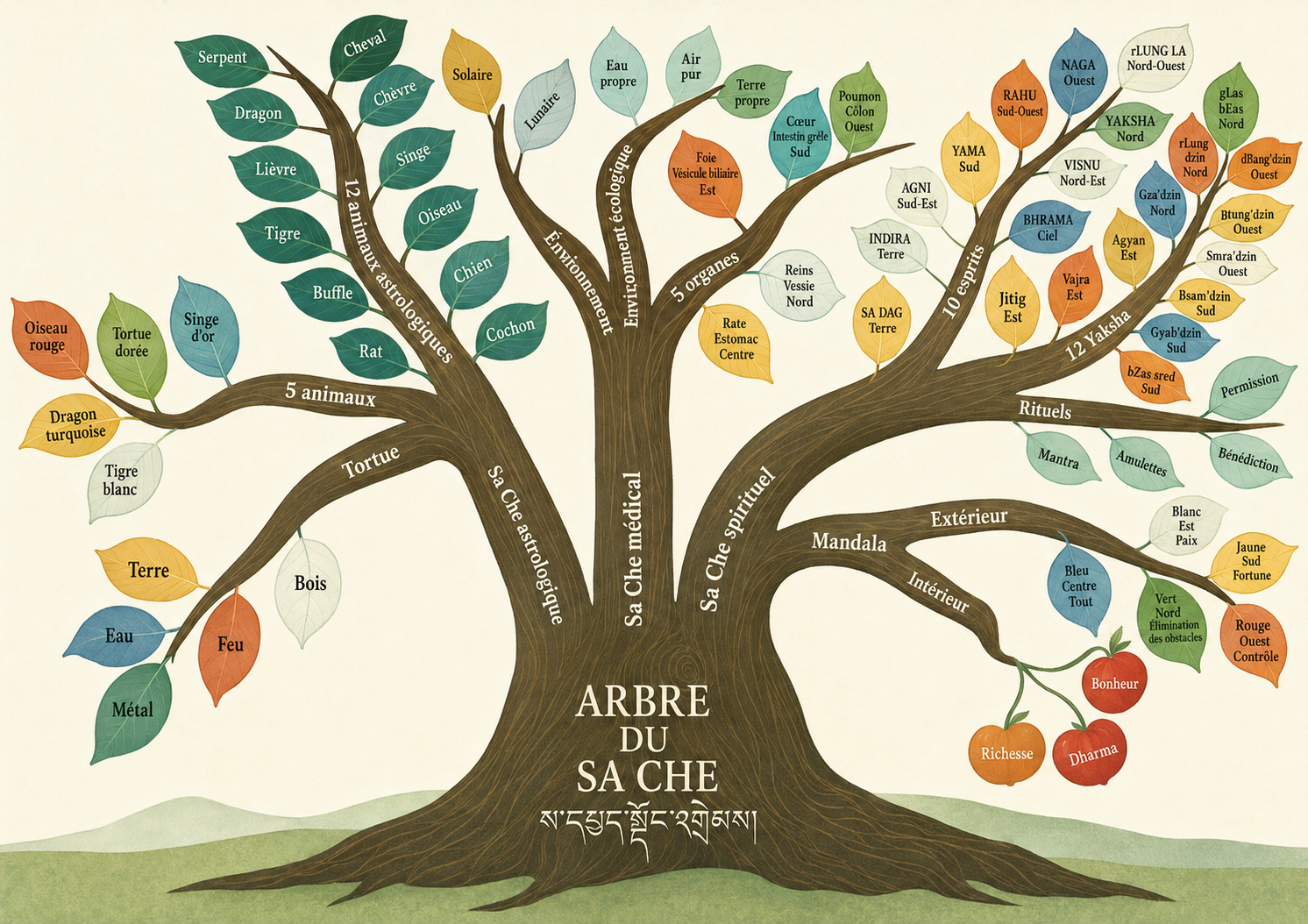
Sa Ché tree showing its astrological, medical and spiritual dimensions, along with elements, animals and directions.
The Sa Ché tree — a concise representation of the traditional reference points associated with this practice.

Area 3

Design and activate

05 Handcrafted Feng Shui fountainsDesign a water feature suited to the configuration of the place.

In certain Feng Shui configurations, water can be used as a traditional activator. Its position is not chosen solely for decorative reasons: it depends on the building’s orientation and period, the plan and the findings of the study.

David designs and makes bespoke, handcrafted Feng Shui fountains. He considers their form, proportions, materials, water flow, sound and integration within the place.

A handcrafted piece in its surroundings

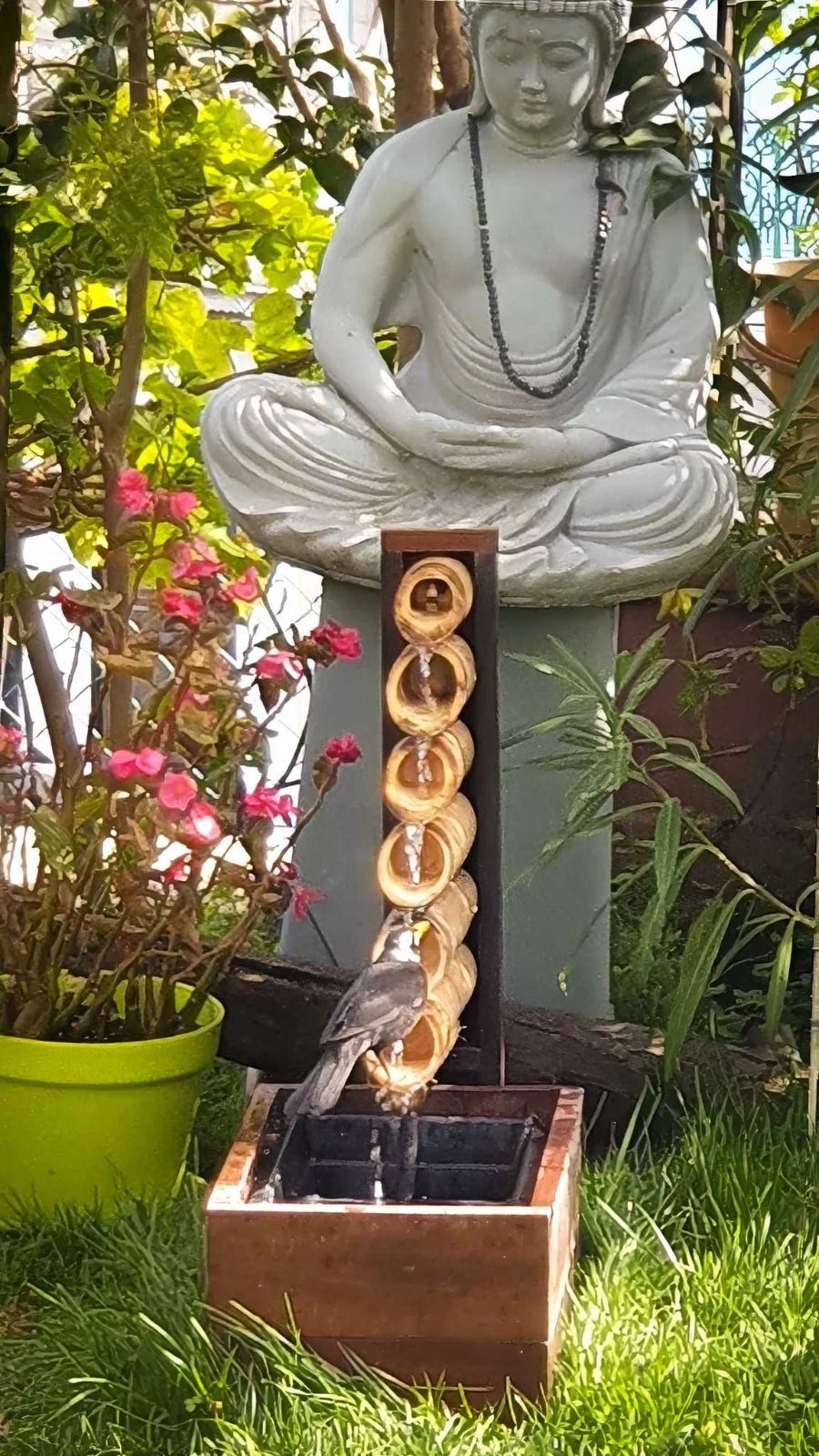
A handcrafted bamboo fountain installed in a garden, with a cascade and wooden basin.
Overall view of the cascade and its wooden basin.
Close-up of the bamboo cascade feeding the fountain basin among the plants.
Front view of the fountain in operation within its planted surroundings.

Each fountain is conceived as an object that is functional, aesthetically considered and connected with the Feng Shui reading. David determines its position and explains the conditions for installation and maintenance.

A fountain is proposed only when the use of water appears relevant to the configuration being studied.

Source confirming this activity: profile of David Martin (opens in a new tab) (in French).

06 Mineral chambersCompose a mineral space for a specific intention, geometry and place.

A mineral chamber is a structured arrangement of stones and minerals, designed according to a defined geometry, intention and location.

In his practice, David studies the place, the intended aim, the selection and arrangement of minerals, and the duration or conditions of use. The chamber may be designed as a space for centring, contemplation or energetic harmonisation within the traditional framework in which it is used.

Its design is not based on a decorative accumulation of crystals, but on a coherent organisation explained to the people concerned.

Every project is personalised. The choice of stones, their arrangement and the proposed use must be agreed with David.

Area 4

Choose the time

07 Tibetan astrologyRead the cycles of time and the relationships between the elements.

Tibetan astrology is traditionally presented as a science for calculating temporal cycles. It developed from several influences, including the Bön tradition, Chinese astrology and the Indian Kalachakra system.

Elemental astrology relates wood, fire, earth, metal and water to the signs of the zodiac, the eight trigrams known as parkha and the nine mewa numbers.

David uses this temporal reading as a complement to Sa Ché and geomancy. It makes it possible to examine the traditional quality of a period and place a project within a broader calendar.

08 Selecting auspicious datesCompare several dates in order to choose a traditionally favourable time.

Date selection involves comparing several possible moments for beginning an action. David develops Tibetan calendars of auspicious dates to bring the temporal dimension into the everyday practice of geomancy.

Depending on the request, this study may support a move, the start of building work, the opening of a venue, the launch of a project, a ceremony or another important action.

David clarifies the intended action, studies the relevant period and presents the dates regarded as most favourable, or those he recommends avoiding within the traditional system being used.

The calendar is a decision-making aid. It replaces neither the project’s practical constraints nor the individual’s freedom of choice.

Initial conversation

Which approach is right for your place?

You do not need to know in advance which method to choose. An initial conversation allows David to understand the request, identify what is at stake in the place and propose the most relevant support.

Discuss your project

04 — Almanac & tools

“Which day should I choose?”

The almanac offers an initial reading of Tibetan time. For each date, it brings together clear reference points and makes the Phugpa and Tsurphu traditions accessible, even to those discovering this field.

David then puts these indications into perspective with your project, your place and your situation to help you make an informed choice.

  • Understand the dayAnimal, Parkha, Mewa and lunar day.
  • Explore the indicationsFavourable and unfavourable activities and observances.
  • Compare the traditionsPhugpa and Tsurphu readings presented separately.
  • Prepare a projectA practical basis for a further conversation with David.
Public almanac Free access

Choose a date and freely discover the day’s animal, Parkha, Mewa and the calendar’s initial indications.

Open the almanac

In the Members’ Area · in French

The complete almanac, supporting your projects.

€150 per year or €25 per month

Actual preview of the complete almanac

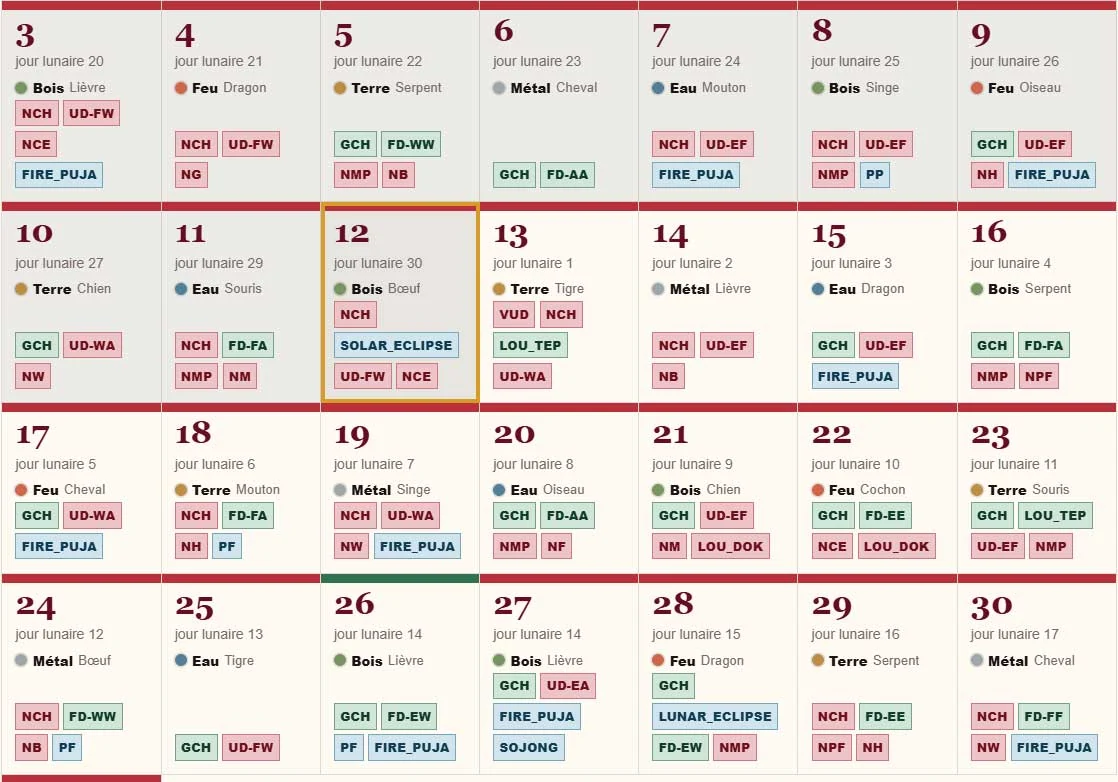
Preview of the complete August 2026 calendar with lunar days, elements, favourable indications, restrictions, practices and events
Example of a month in the French-language Members’ Area. Detailed indications and search tools are available with a subscription.

In the French-language Members’ Area, each day brings together the civil and lunar calendars, the element of the day, favourable indications, restrictions and related practices or events. Members also have the explanations and search tools needed to prepare their projects.

Discover the Members’ Area · FR

05 — Consultations

Responding to your needs.

Energy clearing, geobiology, Chinese Feng Shui and Tibetan Sa Ché for private individuals and professionals: studying a place, buying or selling property, or selecting favourable dates for a one-off or recurring event.

Within this approach, a Feng Shui study is most meaningful when the place has first been clarified energetically and harmonised geobiologically. The exact content, duration and format are decided after an initial conversation.

David Martin carries out an energy-clearing practice outdoors, holding a pendulum and a ritual object.

Consultation

Energy clearing

Carried out on site, and remotely when the configuration of the place permits. It addresses what the tradition describes as the memories of a place and the charges associated with it.

  • The memories of the place, occult charges, local entities and presences of the lower astral plane, as this practice describes them
  • An intervention carried out by David on site, with one or two people participating remotely
  • Additional remedies from the Tibetan tradition after the intervention
Get in touch

Arrangements are discussed during the initial conversation.

David Martin carries out a geobiological survey outdoors using dowsing rods.

Consultation

Geobiology

Carried out on site. It includes energy clearing, followed by the harmonisation of what geobiology calls geopathogenic zones.

  • Pathogenic nodes and star points in telluric networks, faults and underground water veins
  • Vortices, telluric chimneys and astral portals, as described by this practice
  • Identifying electromagnetic fields present in the place: power lines and the density of Wi-Fi or radio waves
Get in touch

Arrangements are discussed during the initial conversation.

A light-filled place and its plan being observed during a Feng Shui study.

Consultation

Geomancy: Chinese Feng Shui and Tibetan Sa Ché

Analysis of the place from plans and on site: its energetic and architectural configurations, together with its position in the surrounding environment.

The study is organised around the areas of life named by the tradition: wellbeing, wealth, reputation, romantic, friendly, family and professional relationships, children, projects, mentors, luck, partnerships and outside assistance, career, growth and spirituality, education and knowledge, vital energy and stability.

  • Chinese Feng Shui, through the Form, Compass and Flying Star schools
  • Tibetan Sa Ché, through a more extensive form school and its holistic or targeted remedies
  • The astrological branch of Sa Ché, to incorporate temporal parameters specific to a private or professional project
Get in touch

Arrangements are discussed during the initial conversation.

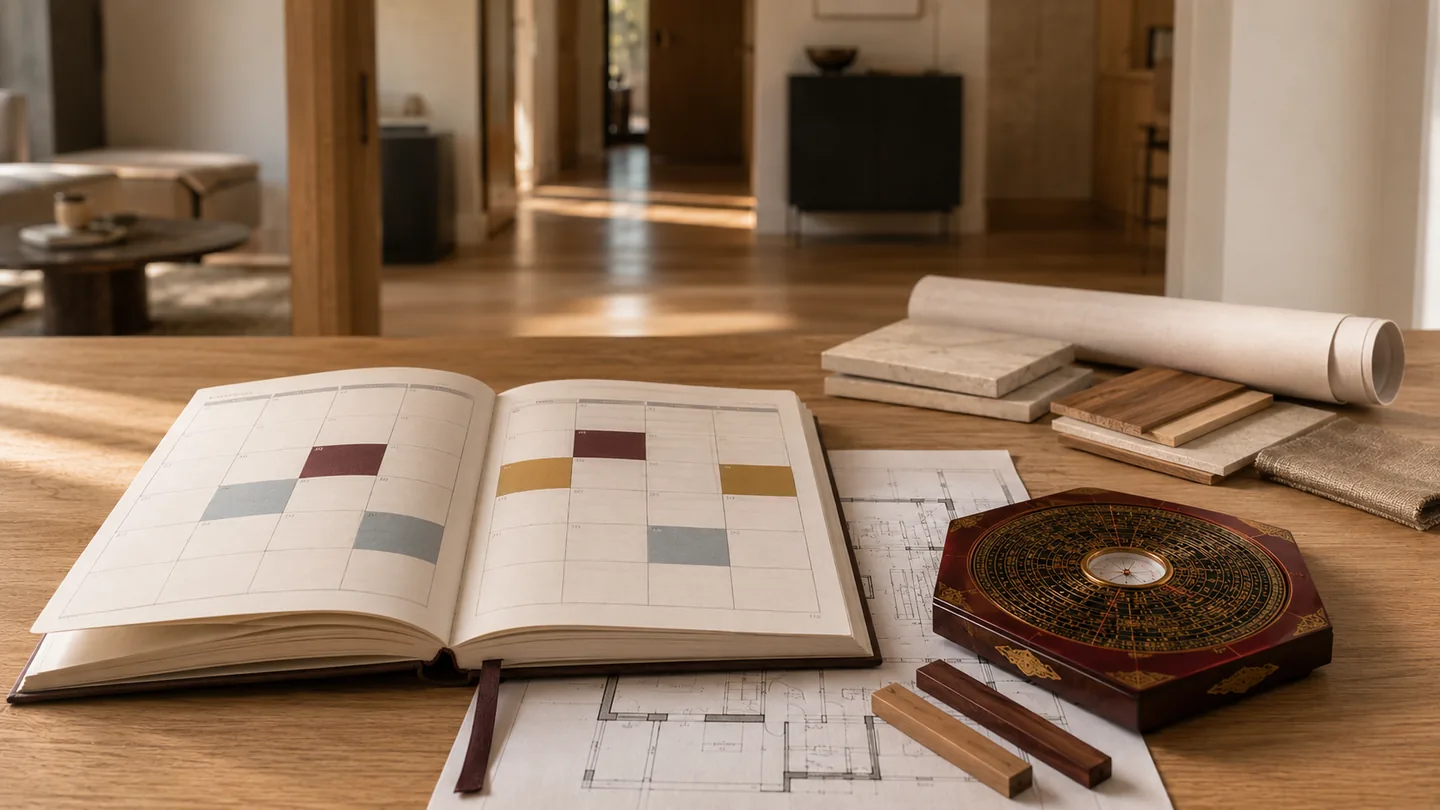
An almanac, a plan and a Feng Shui compass used to examine the choice of a date.

Consultation

Selecting favourable dates

“The same action begun at the wrong time will not have the same result as one begun at the right time.”

Astrological Sa Ché draws on Tibetan calendars to guide the choice of a date according to the nature of the proposed event or action. Within this tradition, taking temporal influences into account is regarded as important support for bringing together favourable conditions.

  • A one-off event or a recurring action
  • The dates traditionally regarded as the most auspicious
  • What remains beyond the scope of calculation
Get in touch

Arrangements are discussed during the initial conversation.

A handcrafted bamboo fountain installed in a garden, with a cascade and wooden basin.

Consultation

The fountain and its position

The Flying Star school of Feng Shui and the Water Dragon of Sa Ché regard the activation of water as one of their most important tools. Chinese tradition has long used specific aquariums or fountains for this purpose, with their position in the place determined precisely.

This study forms part of the geomancy services. It is also offered separately here for private or professional use when a complete study is not planned.

  • The position of the fountain or aquarium according to the configuration of the place
  • The area of life that the tradition associates with this activation, particularly wealth
  • An option suited to selling a property, a professional practice or a shop
Get in touch

Arrangements are discussed during the initial conversation.

Initial conversation

Write to David

Briefly describe your place, your project or the date you are considering. David will reply to clarify your request and propose the most appropriate next step.

Your message is used only to reply to you. It is not used to send the monthly letter.

Required fields must be completed before sending.

06 — The letter

Le Souffle du mois

A short letter once a month: what David is observing at the moment, an explained calendar reference and a question that often arises in consultations.

Fictional extract — illustrating the format

“This month, the question that comes up most often concerns rooms that have become multi-purpose: an office that turns back into a bedroom in the evening, or an entrance used for storage. These uses appear on no plan, yet they change the reading.”

“This month’s reference point concerns periods of transition. I explain exactly what it covers and, above all, what conclusions cannot be drawn from it.”

The letter is prepared from David’s notes with the help of a writing tool, then reviewed, corrected and approved by him before each mailing. Nothing is published without his review. The letter itself is currently sent in French.

07 — Another space

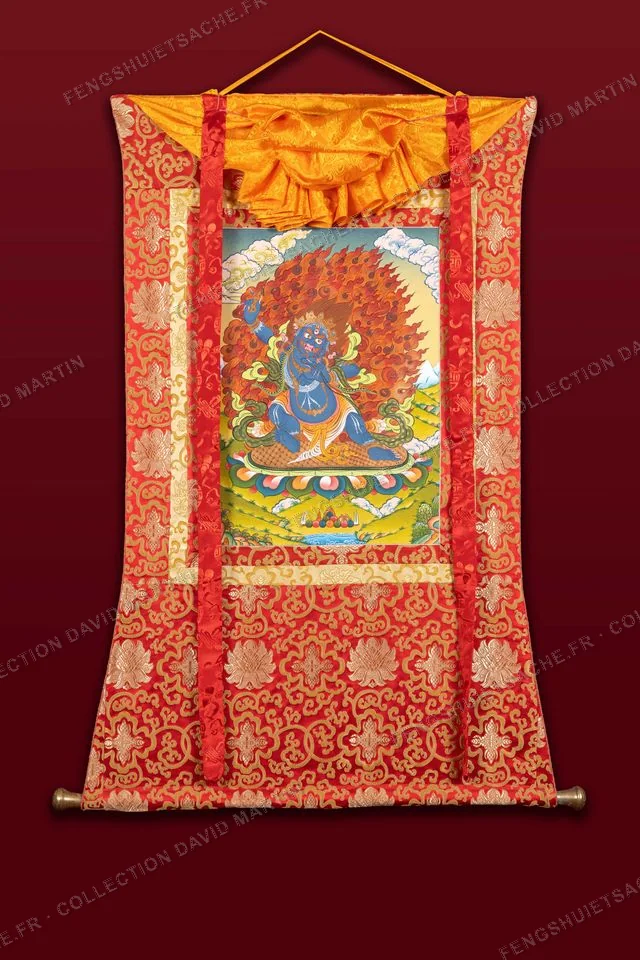
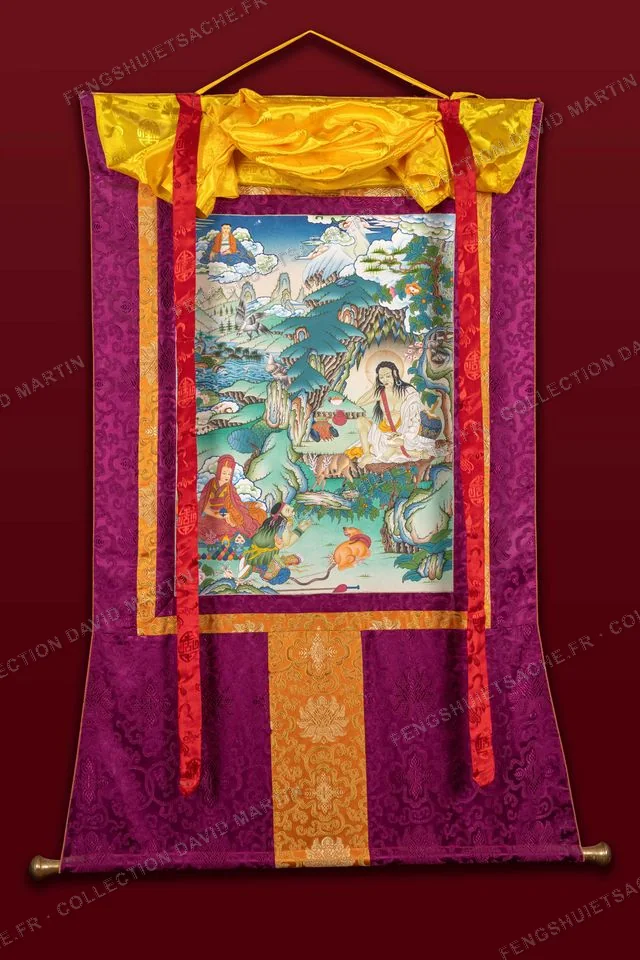
The Thangka Gallery

The collection has its own page, catalogue and viewing experience. It remains distinct from the Feng Shui content: two traditions, two worlds, the same standard of care.